For advisers, counselors and finance bloggers
A money guide that explains the basics before the meeting
People often arrive at a first appointment embarrassed, confused or both. A plain-language book on budgeting, debt or mortgages lets them understand the basics at home, at their own pace, and come to you with better questions. You review it, put your name on it and decide how to share it.
- Step-by-step chapters in plain language
- Free editable outline and 2-page sample
- You review and sign off on every chapter
- Print-ready PDF and EPUB, one price per book

Money conversations stall on the basics
A debt counselor can spend half of a first session explaining the difference between the snowball and avalanche methods. A mortgage broker walks every first-time buyer through the same list of terms. An accountant answers the same questions about records and deadlines each spring. These explanations matter, but repeating them leaves less time for the part only you can do: looking at the client's actual numbers.
Money is also a topic people avoid. Many will not book a call until they feel less lost, and a search online brings them a mix of sales pages and contradictory advice. A calm, structured book from someone they can contact gives them a place to start. They can read about building a debt inventory or comparing loan options without anyone watching, and when they do get in touch, the conversation begins further along. For a finance blogger, the same book is a natural reason for readers to join the email list.
Writing such a book carefully takes time that advisers rarely have. With InkMagnet you describe the topic, your readers and your approach, attach your own notes or materials, and edit the free table of contents. You see two typeset pages before paying. After payment the book is researched, written chapter by chapter, edited and set into PDF and EPUB. You then read it as the professional responsible for it and correct anything that does not fit your practice or your rules.
Finance books professionals make
Pick the question your clients ask most before they are ready to work with you. A few directions:
Debt repayment plan
For debt counselors and nonprofits: how to list every debt, choose a payoff method, talk to creditors and spot settlement scams.
First-time buyer guide
For mortgage brokers: the steps from saving a down payment to closing, the terms on a loan estimate and the questions to ask a lender.
Household budget workbook
A simple system for tracking spending, building a cash buffer and planning irregular bills, with worksheets readers fill in.
Small business records guide
For accountants and bookkeepers: what to keep, how to organize receipts and what a client should prepare before tax season.
Money basics for a life stage
Finances for new parents, recent graduates, divorce or the years before retirement. A focused book speaks to people at the moment they search for help.
Blog newsletter gift
For finance bloggers: your core method in book form, offered in exchange for an email address or sold as a low-priced product.
A real book made with InkMagnet
Example: “How to Get Out of Debt: A Step-by-Step Plan” (43 pages)
A guide made in InkMagnet for US readers with several debts. It moves through six stages: building a debt inventory and checking the credit report, saving a starter buffer, comparing the avalanche and snowball methods, freeing up money in the budget, dealing with creditors (including nonprofit credit counseling and the risks of for-profit settlement), and staying on track. It draws on Federal Reserve data and uses real dollar figures. Below is its full table of contents.
How to Get Out of Debt: A Step-by-Step Plan · 43 pages · See the book page →
Table of contents
-
1.Facing the Real Number
- Why Avoidance Makes the Problem Bigger
- Building the Debt Inventory
- Check Your Credit Report for What You're Missing
- What the Numbers Are Actually Telling You
- Separating the Debt From the Feeling About the Debt
- Keeping the Inventory Alive
-
2.Build the Buffer First
- Why a Cushion Comes Before the Sprint
- Sizing the Starter Fund
- Where the Money Should Live
- Building It Faster With Money You Already Have
- A Cash Buffer Beats an Available Credit Line
- What to Do Once the Buffer Is Built
-
3.Choose Your Method and Run the Math
- The Debt Avalanche
- The Debt Snowball
- Comparing the Two Methods
- Running the Numbers on Your Own Debts
- Consolidation: Tool or Trap
-
4.Free Up Real Money
- A Budget Built Around Payoff, Not Around Guilt
- Negotiating the Bills You Already Have
- Cutting Without Misery
- Shopping Insurance and Utilities Once a Year
- When Cutting Isn't Enough
-
5.Deal With Creditors Directly
- Calling Before You're in Trouble
- Nonprofit Credit Counseling
- The For-Profit Debt Settlement Trap
- If a Debt Has Already Gone to Collections
- Red Flags Worth Memorizing
- When Bankruptcy Is the Honest Answer
-
6.Stay the Course and What Comes Next
- Tracking Progress in a Way That Actually Motivates
- Handling a Bad Month Without Abandoning the Plan
- Protecting Your Credit Score While You Pay Down Debt
- Guarding Against Lifestyle Creep
- Where the Money Goes After Debt Is Gone
What the pages look like
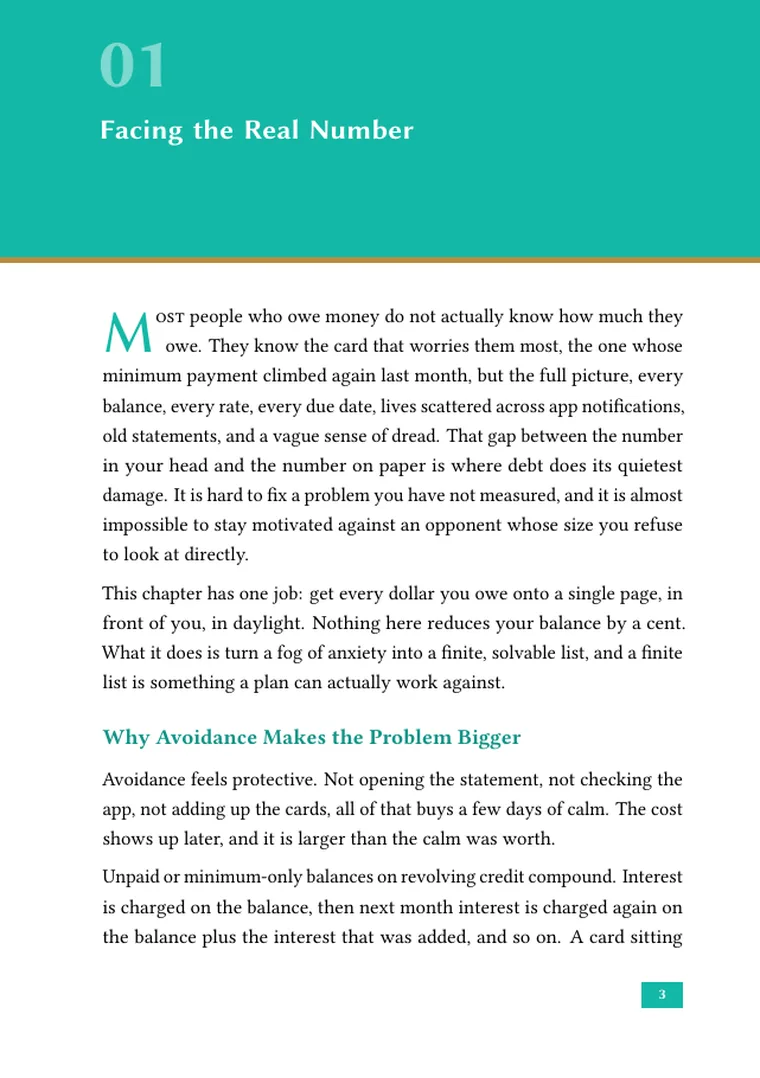
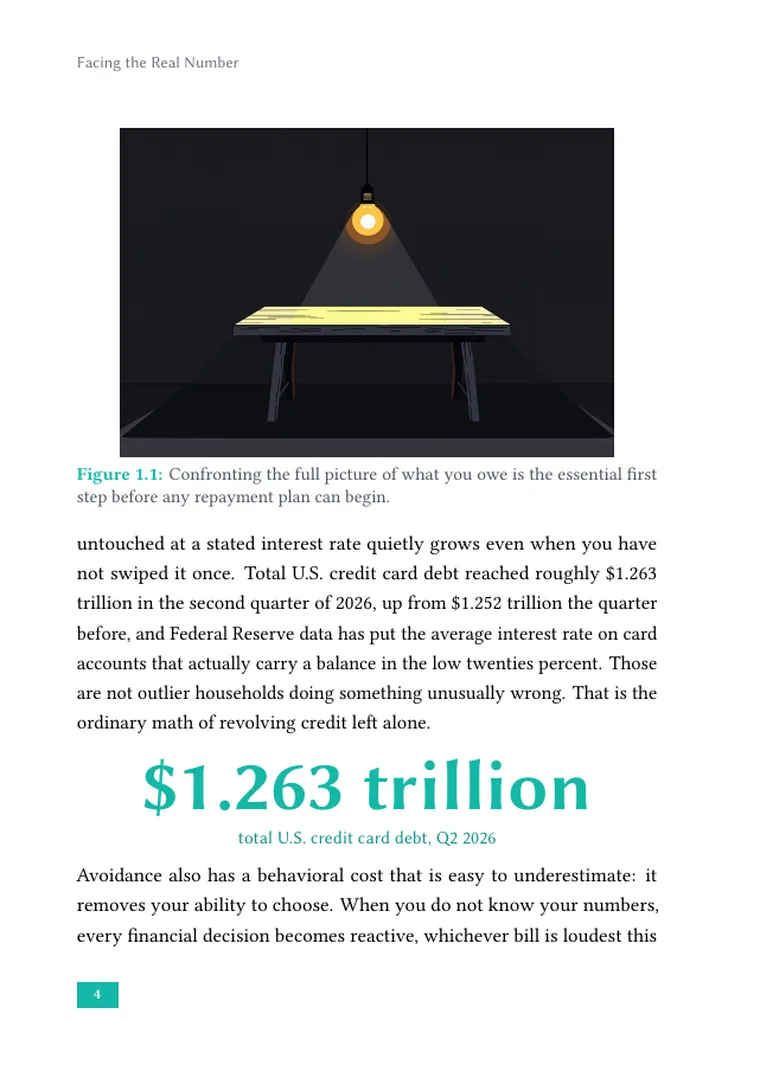
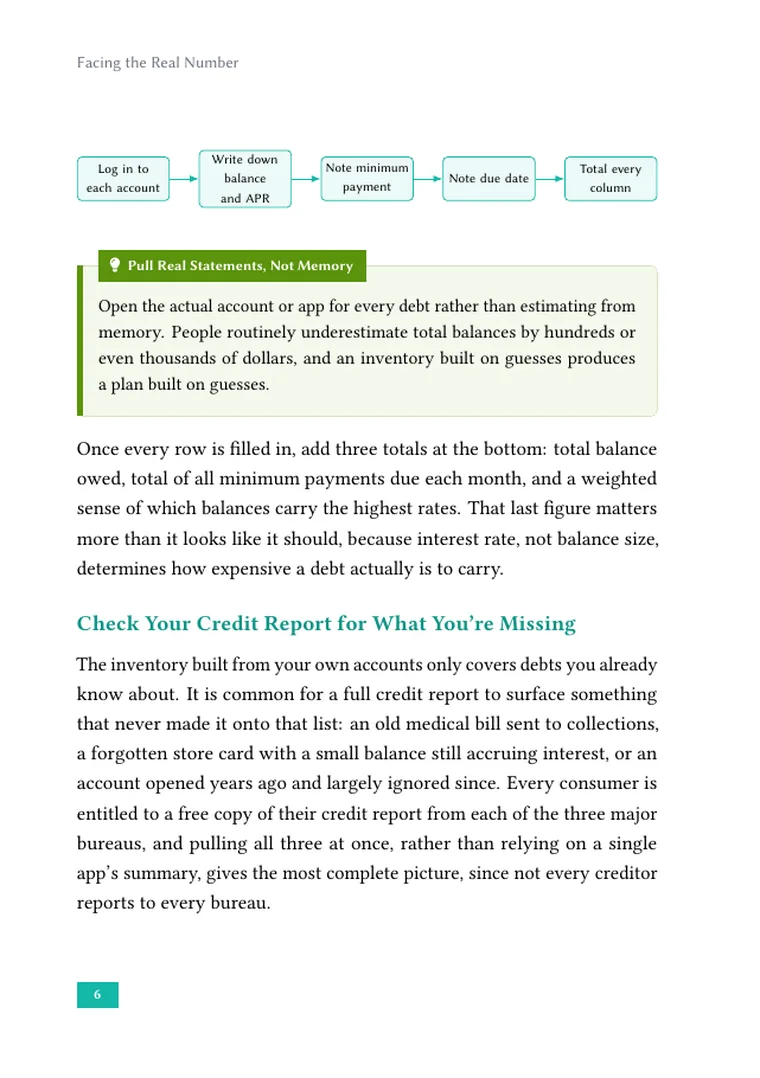
Real pages from the opening of this guide, typeset as they appear in the PDF. Click any page to enlarge it.

From your client explanations to a finished guide
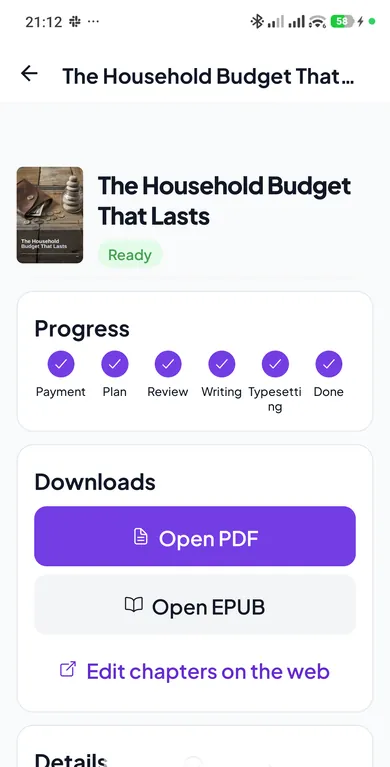
You work in the browser or in the Android app. This is how a finance guide comes together.
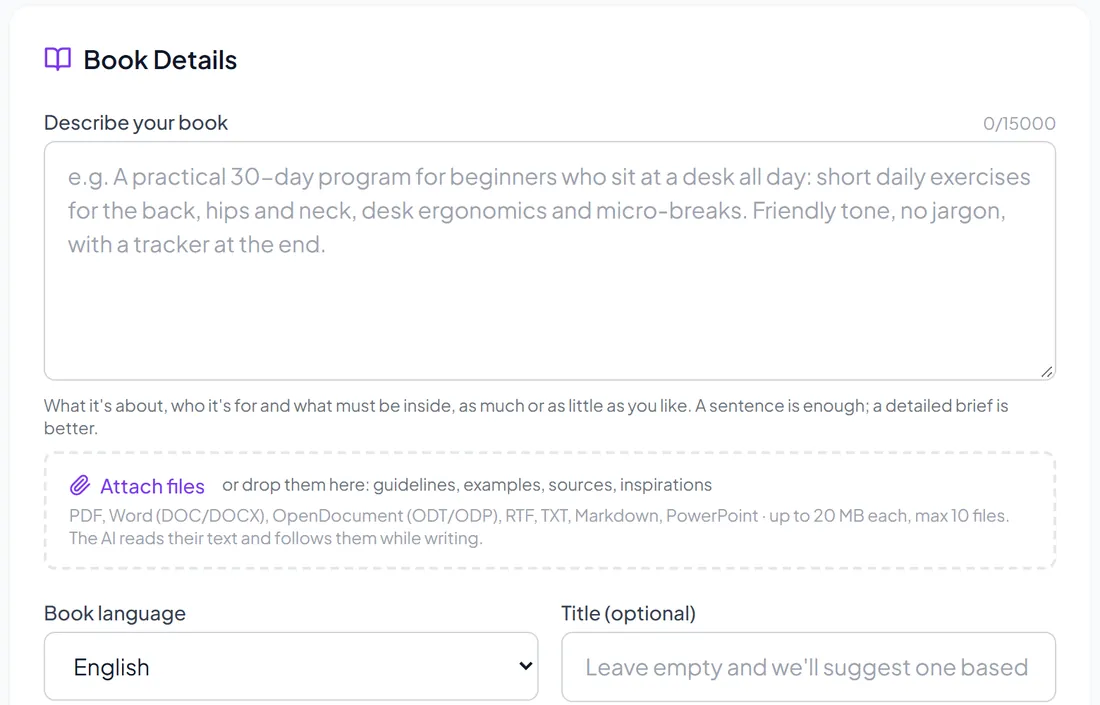
- 1
Describe the reader and the topic
Say who the book is for, which country's rules apply and what readers should be able to do after reading it. Attach checklists, handouts or notes you already give clients.
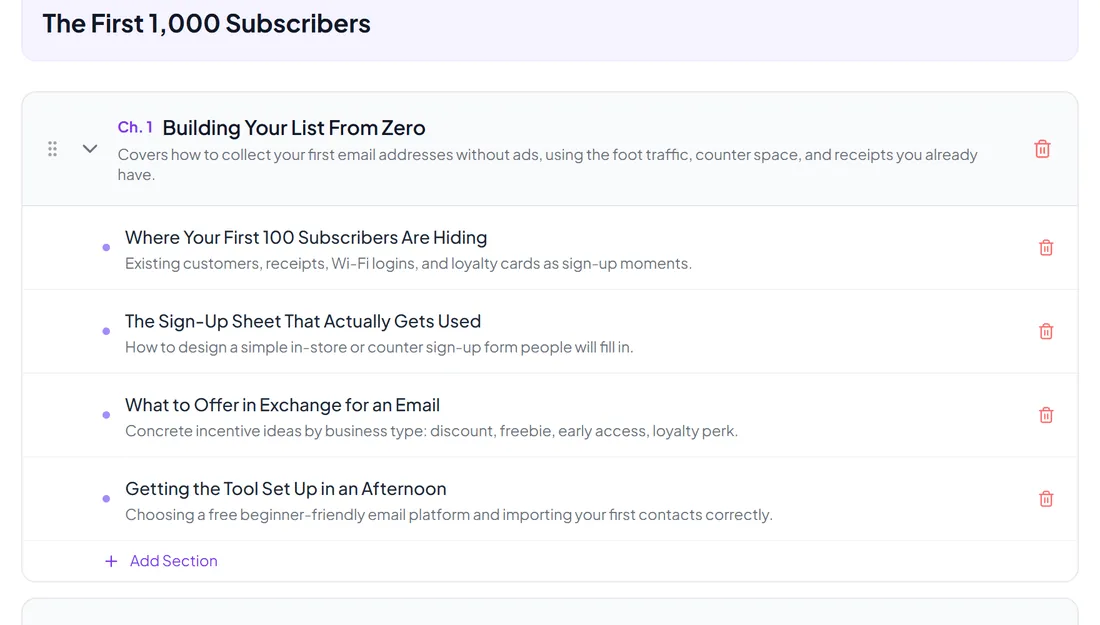
- 2
Shape the outline
You get a title and a full table of contents for free. Remove topics outside your practice, add the questions you hear most and put the chapters in the order you explain things.
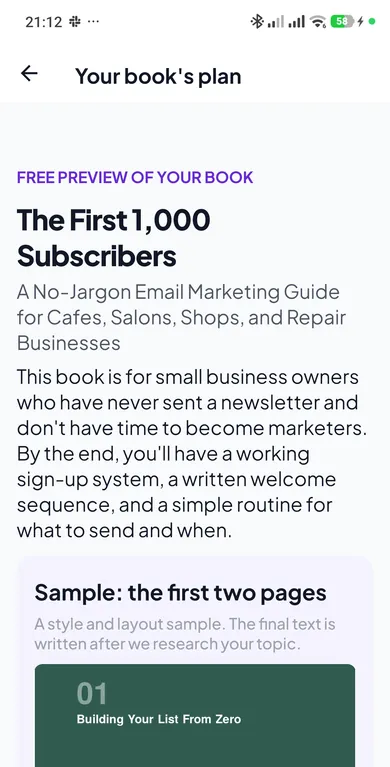
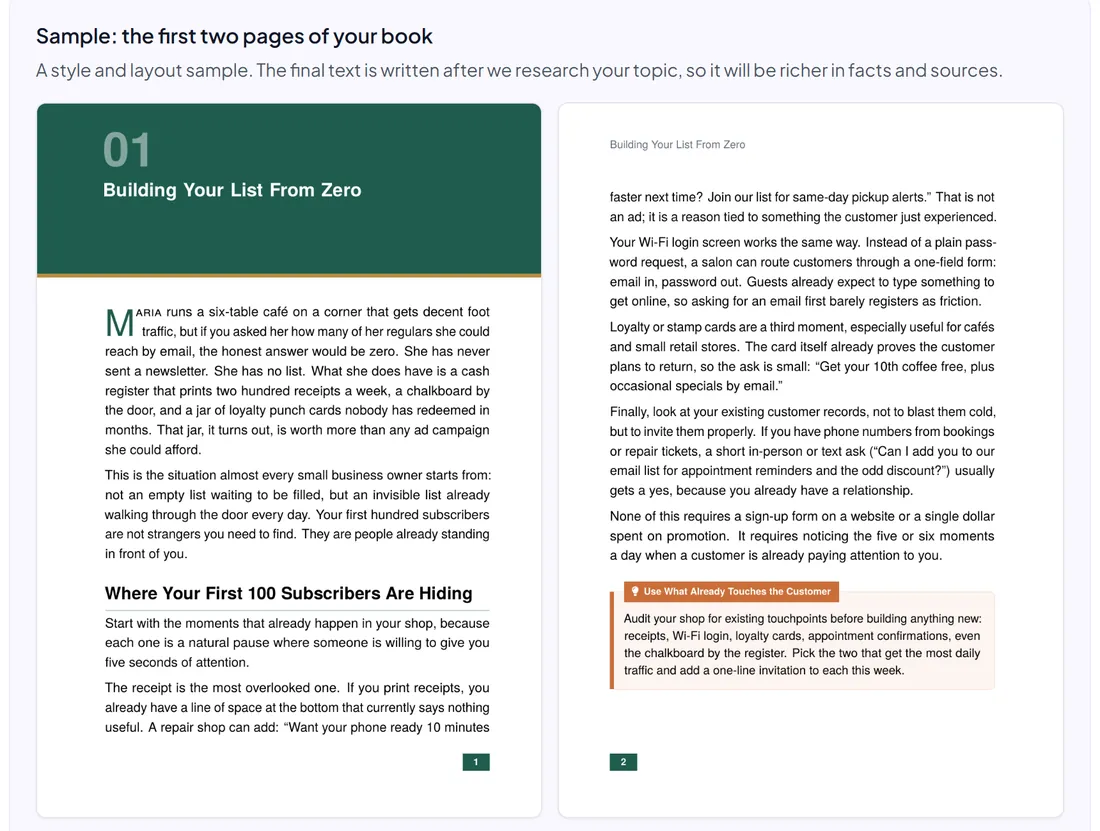
- 3
Read a 2-page sample
Check two typeset pages for tone and level of detail. A guide for anxious first-time readers needs a different voice than one for business owners.
- 4
Verify, then share
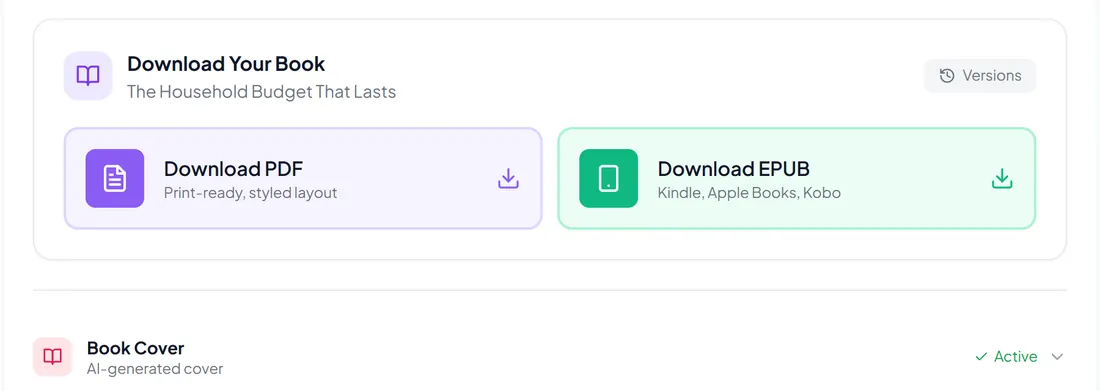
Download the PDF and EPUB and read every chapter. Correct figures, rules and wording in the chapter editor, add your own disclaimer and contact details, and rebuild the files before anyone sees them.
How to put the guide to work
A finance book builds trust only when it is accurate and easy to find. A few ways to use it:
Send it before the first appointment
Email the guide when someone books a call and suggest one chapter to read first. You spend the meeting on their numbers instead of definitions.
Download on your website
Offer the PDF on the page where people look for your services. It gives cautious visitors a low-pressure first step.
Follow-up emails from chapters
Turn sections into a short email series: one step of the plan per message, with an invitation to get in touch if they want help with their own case.
Review it once a year
Limits, rates and rules change. Edit the affected chapters each year and rebuild the files so readers always get the current version.
Frequently asked questions
Is the book financial advice?
No. The book is general education, and it should say so clearly. It does not know any reader's situation. You review every chapter and decide what is published under your name, and you add any disclosures your profession or regulator requires.
Who checks that the figures and rules are correct?
You do. The content is researched and language-edited, but rates, limits and regulations differ by country and change over time. Read the whole book as the professional responsible for it and correct anything in the chapter editor before sharing it.
Can it follow my own method?
Yes. Describe your approach or attach your materials, then edit the outline before paying. After the book is ready you can rewrite any part in the chapter editor and rebuild the PDF and EPUB.
Can I publish it under my firm's name?
Yes. You set the title and author, and you get full rights to the finished book. Add your logo, contact details and a QR code to a link you choose, such as your booking page.
How much does it cost?
One fixed price per book, depending on the number of pages, with no subscription. The title, table of contents and 2-page sample are free.
What if I want to change something in the finished book?
You have three options. Edit any chapter yourself in the built-in editor. Tell the AI what to change in a chapter or section (shorten, simplify, add an example): you see the change first and keep it only if you like it, three times per book. Or use “Check by a human”: describe what is wrong and our editor corrects it by hand, free of charge, up to three requests per book.
Help clients understand the basics before they call
Describe your guide in a few sentences. The table of contents and a 2-page sample are free.
Plan my finance guideThe table of contents and a 2-page sample are free. You pay only for the finished book.