For coaches, mentors and therapists
A self-improvement book with steps readers can take today
Your clients do not need another list of inspiring quotes. They need to know what to do on Monday morning, and what to do when Wednesday goes badly. Put your method into a structured guide with concrete exercises and a plan, typeset as a PDF and EPUB under your name.
- Day-by-day or step-by-step structure
- Free editable outline and 2-page sample
- Exercises and reviews readers fill in
- Print-ready PDF and EPUB, one price per book

Insight fades by the end of the week
A good session leaves a client with a clear idea of what to change. Then ordinary life returns: work deadlines, a sick child, a bad night's sleep. Without something to hold the plan in place, the idea from Tuesday becomes a vague intention by Saturday. Coaches and therapists see this all the time, and the usual fix is a worksheet or a long follow-up email that gets buried.
A book gives the change a sequence. Instead of a single big goal, the reader gets a series of small, specific steps: decide on one habit, attach it to something they already do, write down what happens if they miss a day. A mentor can use it as the backbone of a group program. A therapist can suggest a chapter as homework between appointments. A blogger can offer it to readers who keep asking how to apply the ideas from the posts. In every case the book continues your work at the times you cannot be there.
The difficulty is that self-improvement writing easily turns generic. With InkMagnet you describe your method, your readers and the situations they struggle with, attach your own notes if you have them, and edit the free table of contents until it reflects how you actually work. You read two typeset pages before paying. After payment the book is researched, written chapter by chapter, edited and set into PDF and EPUB.
Books coaches and mentors make
The best topic is the change your clients try to make again and again. A few directions:
30-day plan
One small task per day toward a single change, with weekly reviews. A clear format that readers can start the day they download it.
Workbook for a group program
Exercises, prompts and trackers for each week of your program. Participants keep their progress in one place instead of scattered notes.
Between-session companion
For therapists and counselors: short chapters on topics you return to with many clients, suggested as reading between appointments.
Focused guide on one problem
Procrastination, stress at work, boundaries, confidence in meetings. A narrow topic reaches people at the moment they search for help.
Mentoring handbook
For mentors and leaders: the frameworks you use with mentees, with questions to work through before each conversation.
Reader gift for a blog or podcast
Your core ideas turned into a practical plan, offered for an email address or sold as a low-priced first product.
A real book made with InkMagnet
Example: “How to Build Habits: A 30-Day Implementation Plan” (87 pages)
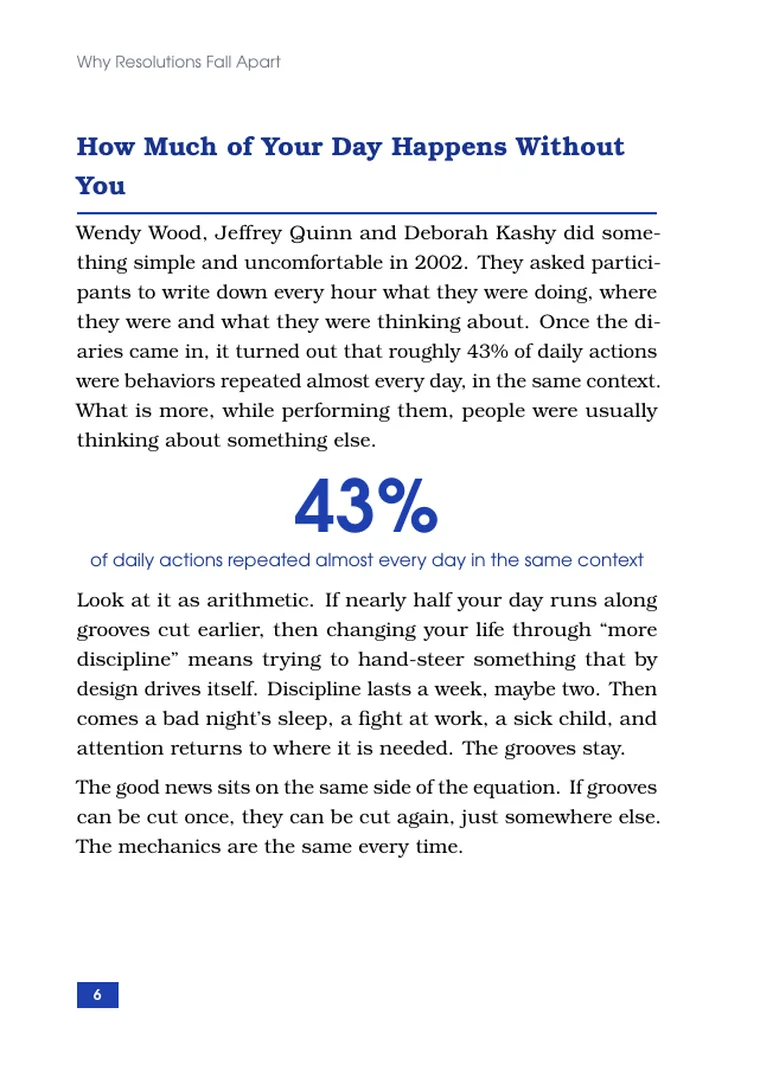
A guide made in InkMagnet for readers who have tried and abandoned new habits before. It starts with why resolutions fall apart, then sets out seven decisions to make before day one (one habit, a minimum version, an anchor, an if-then plan and more). The core of the book is thirty days in three stages, launch, stabilization and standing on its own, with one task per day and weekly reviews, followed by what to do after day 31. It is grounded in habit-formation research rather than motivation. Below is its full table of contents.
How to Build Habits: A 30-Day Implementation Plan · 87 pages · See the book page →
Table of contents
-
1.Why Resolutions Fall Apart
- Stale Popcorn
- How Much of Your Day Happens Without You
- Where the Twenty-One Days Came From
- Five Reasons Your Previous Attempts Died
- What Thirty Days Will Actually Give You
-
2.Designing the Habit: Seven Decisions Before You Start
- The Hour That Decides the Month
- Decision One: One Thing
- Decision Two: The Version You Cannot Fail to Do
- Decision Three: The Anchor
- Decision Four: The If-Then Plan
- Decision Five: Friction in Both Directions
- When the Habit Is About Stopping
- Decision Six: How You Record It
- Decision Seven: The Criterion for the End of the Month
- What a Fully Completed Card Looks Like
-
3.Days 1–10. Launch
- What the First Ten Days Do
- Do the Minimum Version and Nothing More
- Pin the Habit to the Anchor
- Write the If-Then Sentence With a Time
- Set the Stage in the Evening
- Remove One Friction, Add One
- Move the Habit From Memory Onto Paper
- The First Weekly Review
- Write the Return Procedure
- Set Up a Reward That Arrives Immediately
- Check the Stability of the Context
-
4.Days 11–20. Stabilization
- What the Second Ten Days Do
- A Day Without Motivation
- Build the Floor Version
- Audit the Competing Cues
- The Second Weekly Review
- Check What You Are Actually Measuring
- Raise the Bar by One Step
- Do the Habit Away From Home
- Tell One Person
- Distinguish a Planned Break From a Missed Day
- A Day Without a Reminder
-
5.Days 21–30. Standing on Its Own
- What the Third Ten Days Do
- The Third Review and the Shape of the Curve
- Find Your Main Saboteur
- Move From the Calendar to the Context
- Rehearse the Return After a Slip
- Trim the Ritual
- Name the Category, Not an Affirmation
- Prepare the Next Habit, but Do Not Start It
- Audit Your Surroundings
- Write Your Own Operating Manual
- Review, Decision and a Plan for the Next Two Months
-
6.Day 31 and Beyond
- Where You Really Are After a Month
- What Disarms a Habit After Day Thirty
- The Return Protocol After a Longer Break
- Windows Where Change Comes Easier
- Habits Less Frequent Than Daily
- When the Habit Cannot Be Seen in the Boxes
- When to Add a Second Habit
- What You Take From This Month
- What You Do Tomorrow
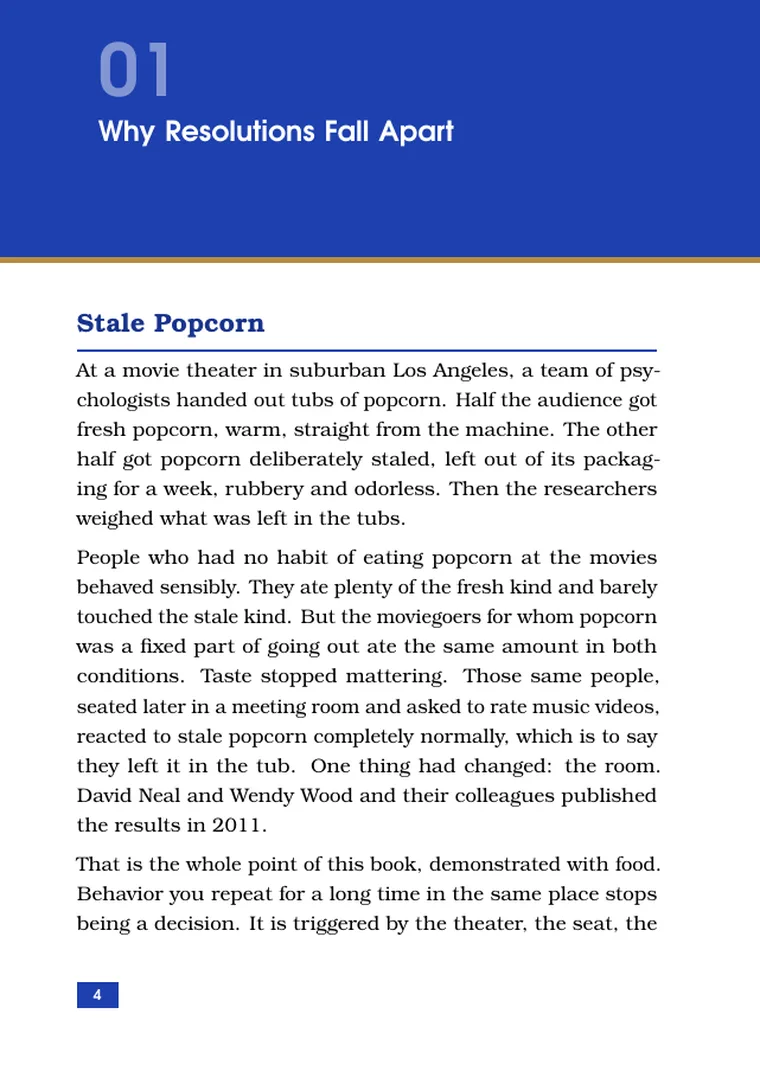
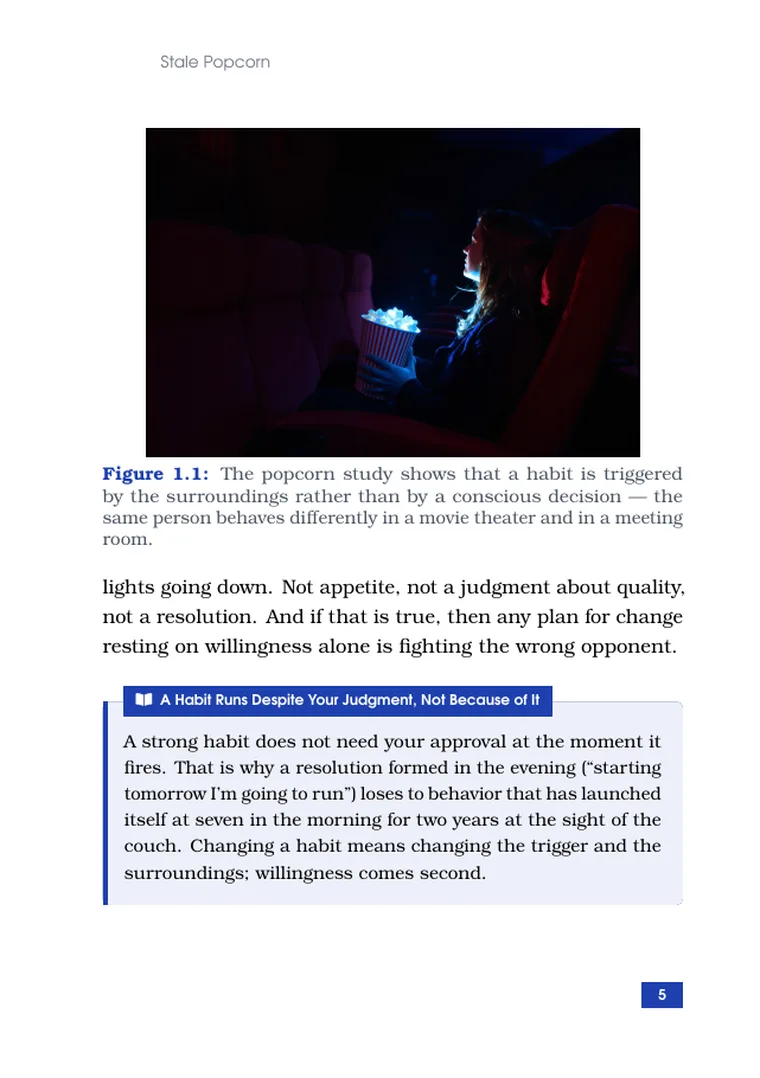
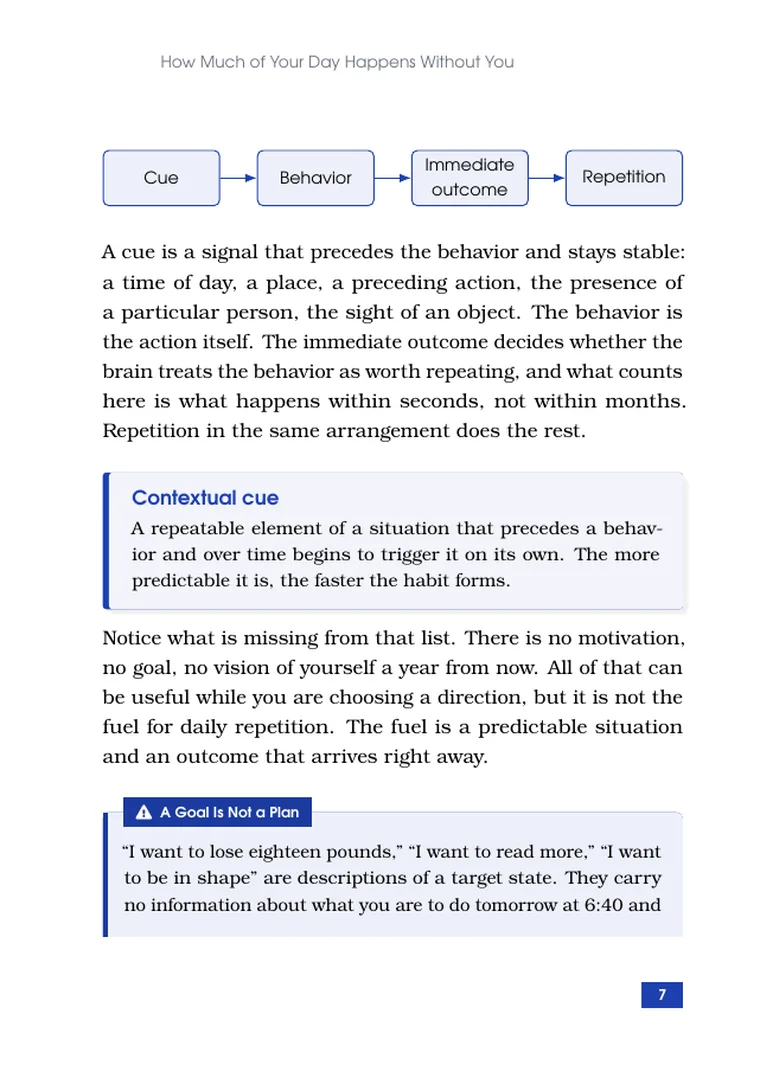
What the pages look like
Real pages from the opening of this book, typeset as they appear in the PDF. Click any page to enlarge it.

From your method to a book readers follow
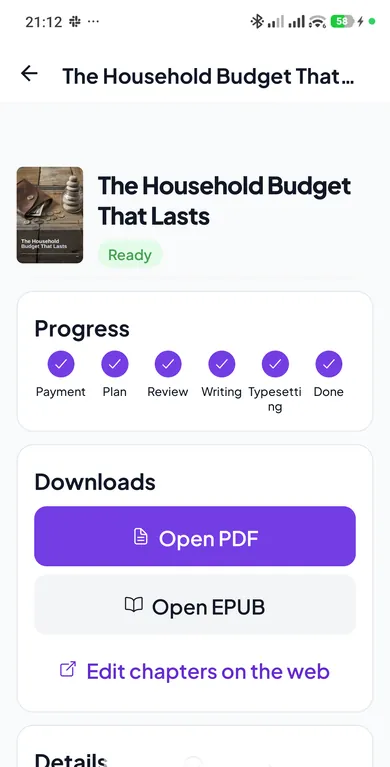
You work in the browser or in the Android app. This is how a self-improvement guide comes together.
- 1
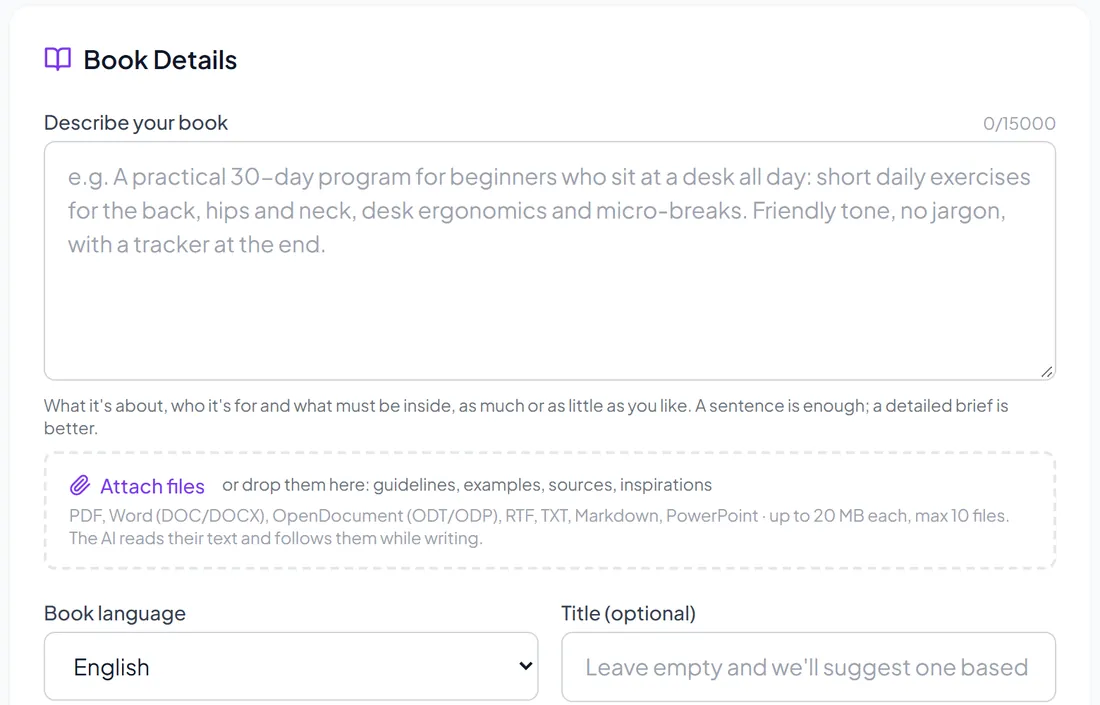
Describe your method and readers
Say who the book is for, what they struggle with and what you always tell clients in this situation. Attach session notes, worksheets or blog posts to keep the book close to your approach.
- 2
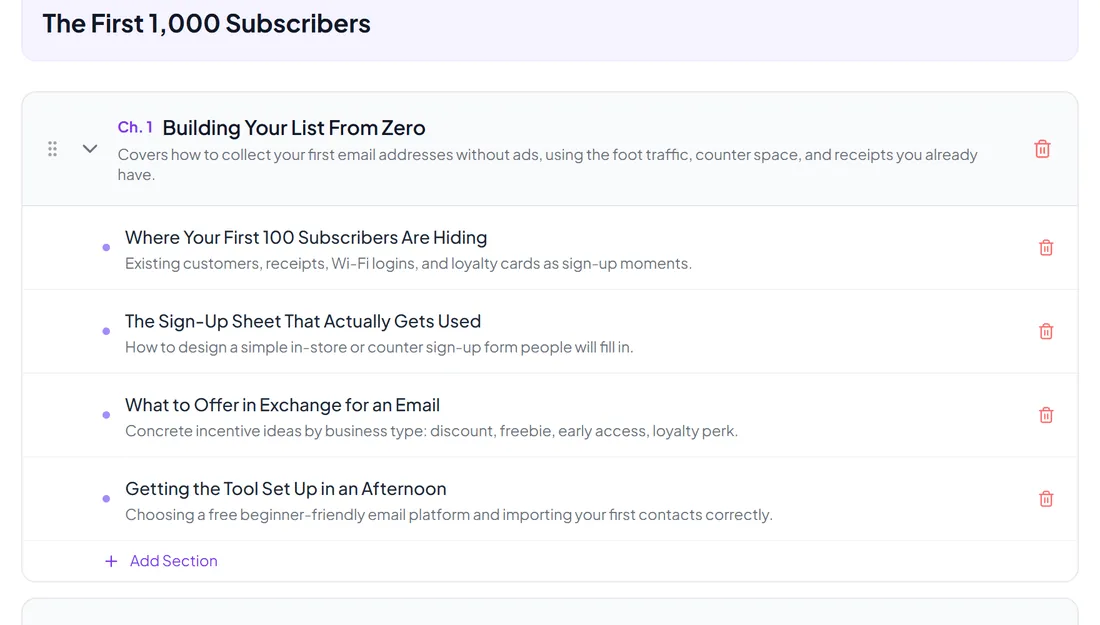
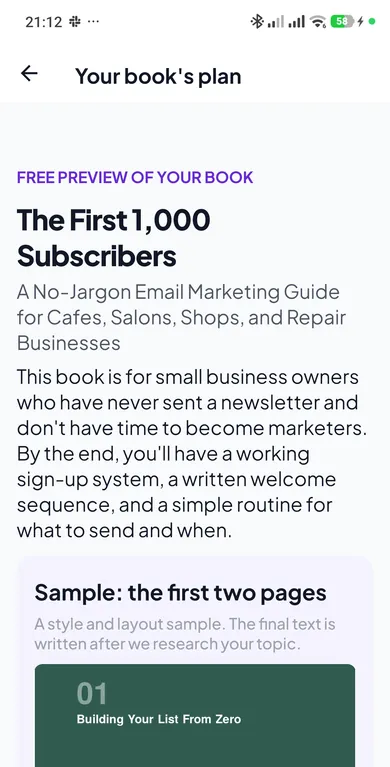
Shape the plan
You get a title and a full table of contents for free. Change the order of steps, cut ideas you do not teach and add the exercises that work best with your clients.
- 3
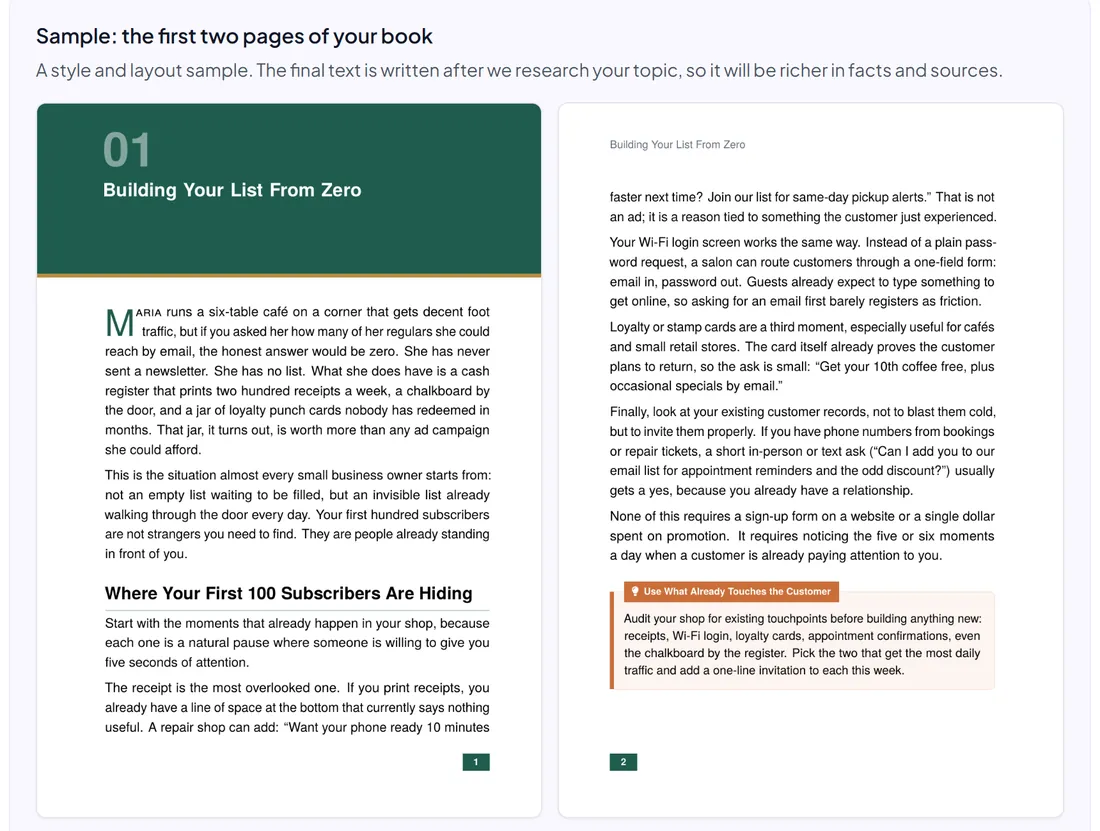
Check the voice in a 2-page sample
Read two typeset pages and ask whether they sound like you would in a session. Adjust the description and try again before you pay.
- 4
Review and share
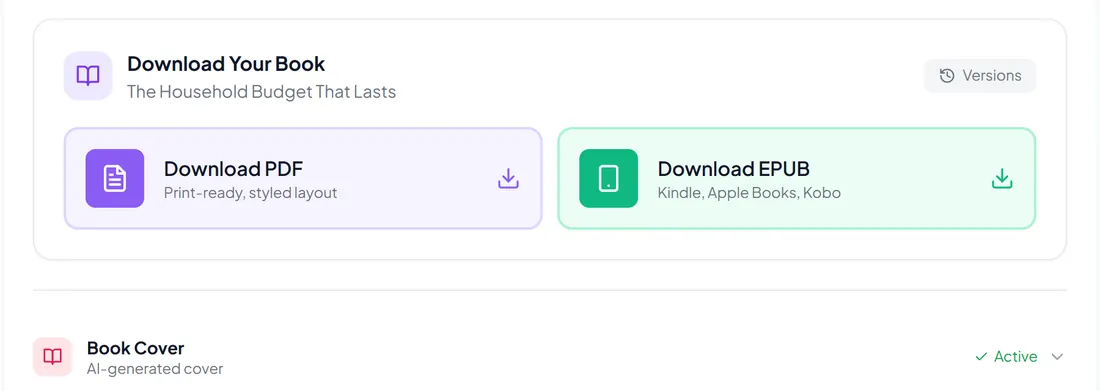
Download the PDF and EPUB. Read the book, rewrite examples in the chapter editor to match your clients' situations, add your photo and contact details, and rebuild the files.
How to use the book in your practice
A self-improvement guide works when readers come back to it. A few ways to keep them coming back:
Start of a program
Give the book on the first day of a course or coaching package. Each session can begin from the chapter participants worked through that week.
Email sequence that follows the plan
Send a short message on the days that matter most, such as the first weekly review, with a reminder of the chapter to open.
Homework between appointments
Suggest one specific exercise rather than the whole book. Clients arrive with something concrete to discuss.
Entry product for new people
Offer the book as a free download or at a low price. Readers who finish the plan already know how you work and what you focus on.
Frequently asked questions
Will the book reflect my method, not generic advice?
That depends on how much of your method you put into the description and the outline. Describe your principles and exercises, attach your materials and edit the table of contents before paying. Afterwards you can rewrite any chapter in the chapter editor.
I am a therapist. Can I give the book to clients?
Yes, after you review it. The book is researched and language-edited, but it is general self-help material, not therapy or a substitute for it. Read it as the professional responsible for it, adjust anything that does not fit your clients and say on the first pages what the book is and is not.
Can readers fill in the exercises?
The book can include prompts, checklists and review questions. Readers can print the PDF and write in it, or keep their answers in a notebook alongside the EPUB.
Can I sell it or include it in a paid program?
Yes. You get full rights to the finished book, so you can sell it, give it away or bundle it with coaching and courses.
How much does it cost?
One fixed price per book, depending on the number of pages, with no subscription. The title, table of contents and 2-page sample are free.
What if I want to change something in the finished book?
You have three options. Edit any chapter yourself in the built-in editor. Tell the AI what to change in a chapter or section (shorten, simplify, add an example): you see the change first and keep it only if you like it, three times per book. Or use “Check by a human”: describe what is wrong and our editor corrects it by hand, free of charge, up to three requests per book.
Turn your method into a plan readers can follow
Describe your book in a few sentences. The table of contents and a 2-page sample are free.
Plan my self-improvement bookThe table of contents and a 2-page sample are free. You pay only for the finished book.